Table Of Content

House Sparrows are not endangered, and their species is listed as ‘Least Concern’ at a global level. However, these birds have a red conservation status in the United Kingdom, where their population declined significantly towards the end of the 20th century. House Sparrows live in gardens, parking lots, streets, around restaurants, farms, and pretty much anywhere they can find grain and food scraps. They often enter buildings like barns and even supermarkets to search for food and nesting opportunities.
Breeding male
In addition to seeds and scraps, American studies have shown that as much as 10% of the house sparrow diet in summer is made up of insects. We agree that the house sparrow is an extraordinarily successful invasive species, and we highlight this aspect of its natural history throughout the manuscript. Importantly, many morphological characteristics also vary geographically. Introduced populations in North America were discovered to have pale coloration in hot, arid climates, but darker coloration in cooler, humid climates (Johnston and Selander, 1964). Outstanding questions about the natural history of house sparrows.

Nest Placement
Examples of sparrows with red heads include the chipping sparrow, cinnamon ibon, chestnut sparrow, tepui brushfinch, russet sparrow, and many others. These common birds like scrubland or tangled chaparral habitat but are also quite common in neighborhoods, city parks, and suburban areas as long as there’s enough shrubby cover. Only males sing, and their songs are a series of several trills lasting for a couple of seconds. Females will leave their nest if there is a predator nearby and act like it has a broken wing while running along the ground to distract it from their nest. Rufous-crowned Sparrows spend much of their time walking or running between shrubs and grasses even though they can fly (although not well).
What Do House Sparrows Eat? (Complete Guide)
They are adaptable and hardy, making them tough as an invasive species – learn more about them below. Humans have introduced this species into several regions outside of their natural range in Eurasia. This species is not known as a particularly musical songbird. Apart from eaves, roof vents, and other suitable cavities, they will also use nest boxes and natural holes in trees and rocky areas. They may build nests in vines and dense tree foliage where suitable cavities are unavailable.
House Sparrow Audubon Field Guide - National Audubon Society
House Sparrow Audubon Field Guide.
Posted: Thu, 05 Feb 2015 09:21:34 GMT [source]
Savannah Sparrows are widespread across California.
This species tends not to move while singing, so you should have time to spot one if you hear them first. Lincoln’s Sparrows are often found in wet meadows in summer, but they like pine-oak forests or tropical forests when they migrate south in winter. White-crowned Sparrows are found in shrubbery habitats with open grassy areas. They also are found sometimes in weedy fields, thickets, and backyards. Similarly, city sanitary practices have improved, which may make finding meals more difficult for sparrows. Livestock is more frequently raised in confined operations, sometimes even indoors.
Slaty brushfinches are mostly gray with rufous-red crowns, white throats, and white wing patches at primary feathers (in some populations). They are omnivores that feed on fruit and insects, usually found in pairs or flocks with other birds. Typically, these sparrows hop around on the ground to eat seeds and insects. But, if you’re lucky, they sometimes visit backyard feeders to munch on black oil sunflower seeds. This species readily visits bird feeders, especially in winter. Feed them sunflower seeds or millet and make sure some of the food ends up on the ground, as they won’t fly up to feeders.
European starlings, house sparrows and Eurasian collared-doves, Marin’s non-native birds - Marin Independent Journal
European starlings, house sparrows and Eurasian collared-doves, Marin’s non-native birds.
Posted: Sun, 02 Jul 2023 07:00:00 GMT [source]
House Sparrows sometimes build nests next to each other, and these neighboring nests can share walls. The best way to find a House Sparrow is to visit an urban area and watch for a conspicuous, tame sparrow hopping on the ground (it might help to bring a sandwich or some birdseed). You can easily attract them with food and they may feed out of your hand. In the countryside, look out for bright, clean versions of the city House Sparrow around barns, stables, and storehouses. Because of its numbers, ubiquity, and association with human settlements, the house sparrow is culturally prominent.
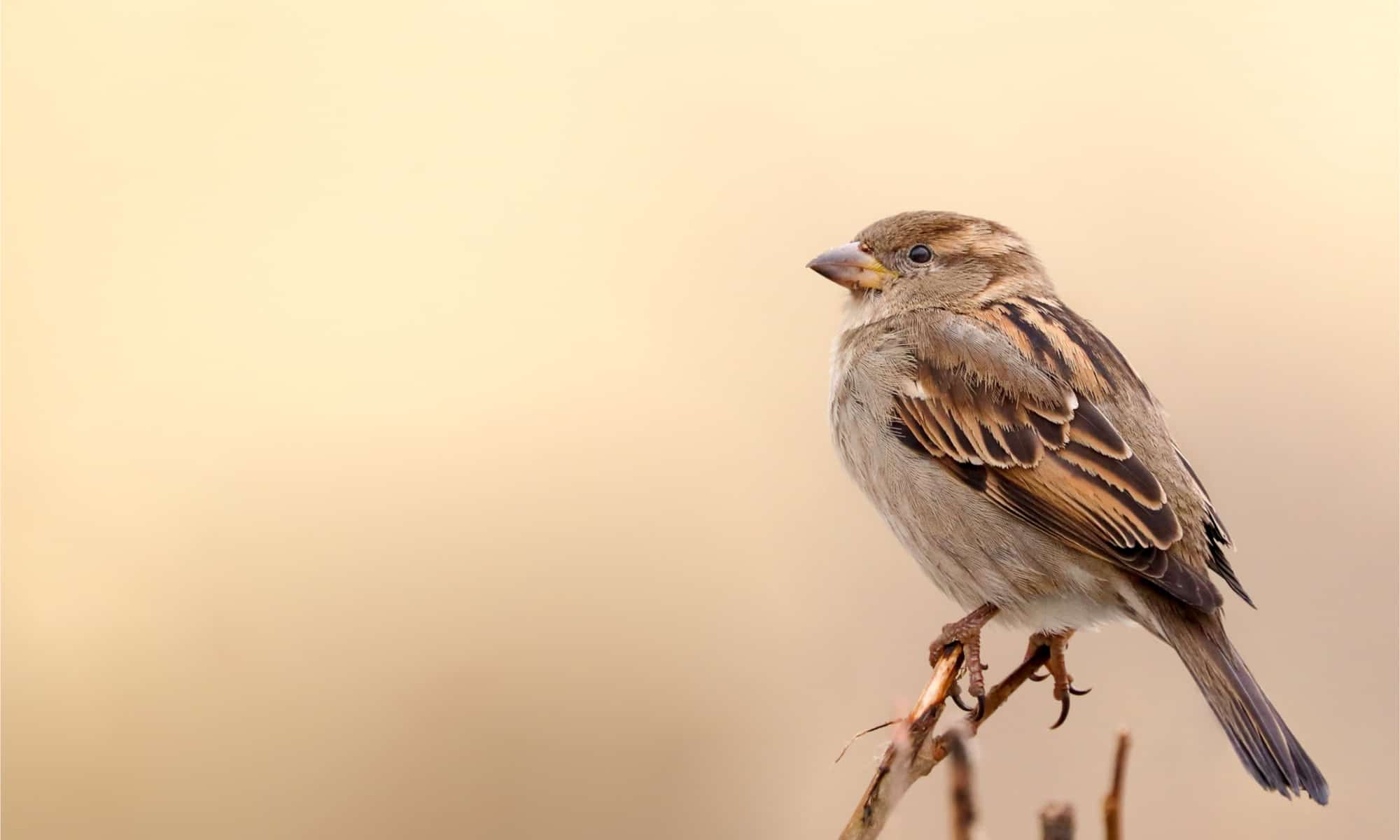
House Sparrow chicks eat regurgitated insects and plant-based foods like grain and animal feed provided by both parents. Adult House Sparrows have a wingspan of seven and a half to ten inches ( cm). House Sparrows are small birds, frequently seen in pairs around farmland, towns, and cities. In the United Kindom and Old World, they are most easily confused with the Eurasian Tree Sparrow (P. montanus). That species also has a limited distribution in the Midwest of the United States. Often described as the most musical of all sparrows, russet sparrows will make “cheep” calls and “chu-swik” songs.
It appears like they would be as soft as a chinchilla to touch. My favorite feature of Song Sparrows is their beautiful songs that can be heard across the continent. The typical one, which you can listen to below, consists of three short notes followed by a pretty trill.
A chunky full-breasted bird with a round head and a stout bill. Breeding males have gray crowns, white cheeks, a black bib, and a chestnut neck. Breeding males have bright chestnut red crowns and napes, black throats, and dark bellies and tails; they become much duller and paler during the winter season. In Europe and Asia, they are known as tree sparrows while in North America where they were introduced are known as Eurasian tree sparrows or German sparrows. These red headed South American sparrows live in montane forests and heavily degraded former forests of Bolivia and Argentina.
First, pre-mate selection, they sing strong and loud trilling notes slowly which then speed up. Second, when the male finds a mate, he sings a much softer, sweeter, slower song from a perch or while flying. Many times, you’ll see them running through the grass to flee a predator.
House Sparrows are small, chunky birds with large heads, short, thick bills, and medium-length tails. Some Palearctic populations are in sharp decline, possibly due to changing land-use patterns. Patuxent Wildlife Research Center, Bird Banding Laboratory 2020. Audubon protects birds and the places they need, today and tomorrow.



No comments:
Post a Comment